 Events In Sialkot
Families booking their first wedding in Sialkot often mix up dholki and mayun — both happen before the barat, both are festive, and both get décor. But they serve different purposes, and that changes how we design the setup.
What dholki is about
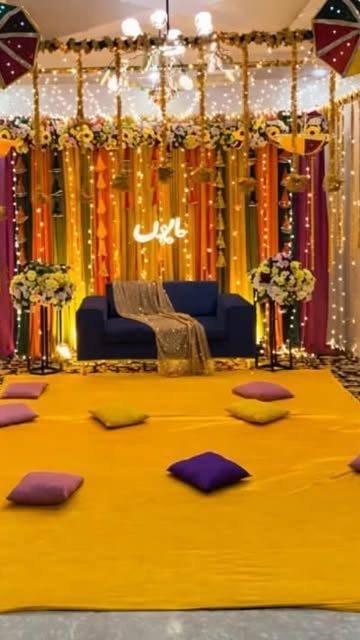
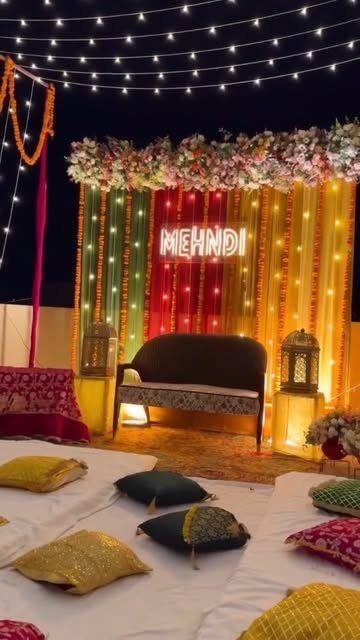
Dholki is the music night. Extended family and friends gather over several evenings (sometimes weekly, in the run-up to the wedding) to sing traditional songs around a dhol player. The décor priority is floor seating and acoustics — comfortable rugs, bolster cushions (gao takiya) arranged in a circle or U-shape, a proper corner for the dhol, and warm string lighting. There is no formal stage; the whole point is that everyone sits together.
What mayun is about
Mayun (also called ubtan) is the ritual where the bride is anointed with a turmeric-and-sandalwood paste before the wedding, traditionally kept indoors and dressed in yellow or green. The décor priority is a staged seating area for the bride — a soft yellow-and-marigold backdrop, floral canopy or phool ka jhoomer above her seat, and a dedicated space in front for the ubtan ceremony itself, with family taking turns.
Key differences at a glance
- Dholki: group seating, no bridal stage, focus on the dhol corner — from PKR 15,000
- Mayun: bridal stage with yellow/marigold backdrop, ubtan space — from PKR 18,000
- Guest count: dholki nights are usually smaller and more frequent; mayun is a single, larger sitting
- Colour palette: dholki décor is flexible and colourful; mayun sticks to yellow, green and marigold tones
Can they be combined?
Yes — many Sialkot families hold dholki and mayun on the same evening, with a simple stage swap: dhol corner and floor seating for the first half, then the backdrop is dressed in yellow florals for the ubtan portion later. This saves on setup cost compared to two separate bookings.
Tell us which one (or both) you are planning and we will suggest the right layout for your venue — WhatsApp us for a same-day quote.